The matchup
Exxon Mobil and Chevron represent the two pillars of the U.S. integrated oil and gas sector. Both firms have navigated the volatile 2026 energy landscape by focusing on structural cost reductions and high-value asset integration.
Exxon Mobil leverages its massive scale in Guyana and the Permian Basin to drive production growth. Chevron counters with the integration of Hess assets, aiming to solidify its long-term reserve base and dividend sustainability.
- Exxon Mobil market capitalization: $665.31 billion.
- Chevron market capitalization: $403.33 billion.
- Exxon Mobil 1-year performance: +41.77%.
- Chevron 1-year performance: +30.01%.
Numbers side by side
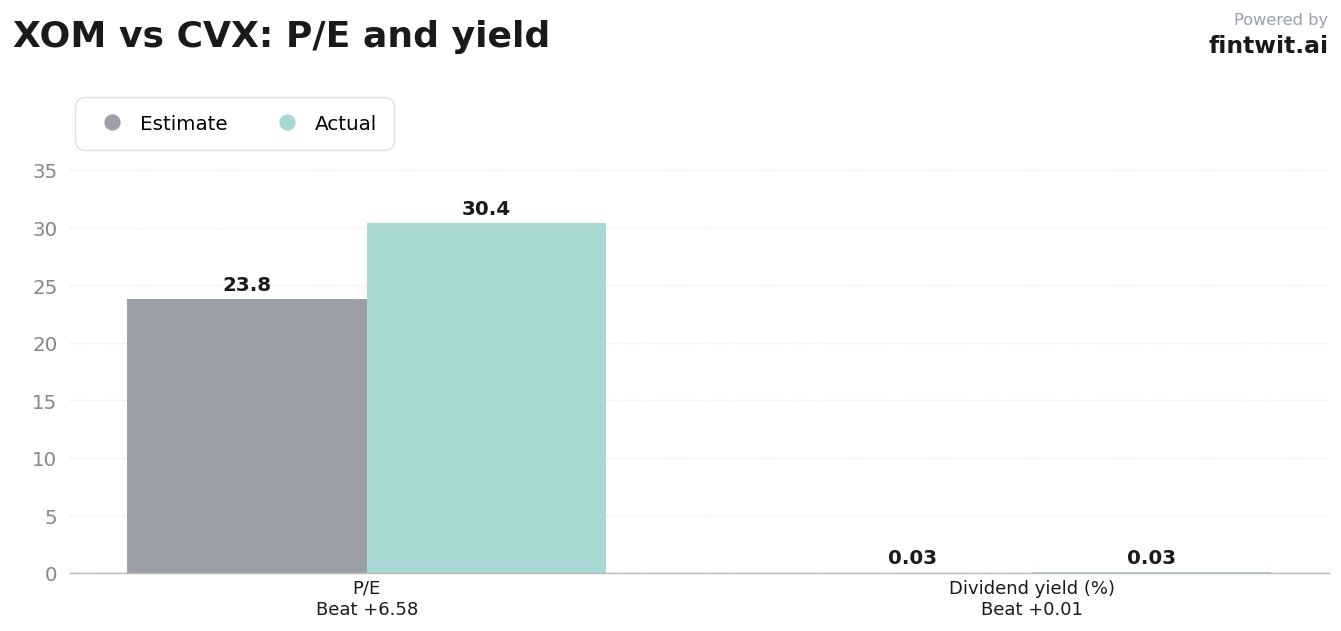
Valuation metrics reveal distinct strategies between the two majors. Exxon Mobil trades at a lower earnings multiple, reflecting its aggressive operational efficiency program.
Chevron maintains a higher P/E ratio, signaling market confidence in its long-term dividend growth and the successful integration of recent acquisitions.
- Exxon Mobil P/E ratio: 23.80.
- Chevron P/E ratio: 30.38.
- Exxon Mobil dividend yield: 2.53%.
- Chevron dividend yield: 3.40%.
- Exxon Mobil 90-day price change: +1.76%.
- Chevron 90-day price change: +3.25%.
Bull and bear on each
Analyst sentiment remains split based on individual risk tolerance and time horizons. Exxon Mobil is favored for its operational scale, while Chevron is praised for its capital return framework.
Execution risks persist for both companies, particularly regarding geopolitical stability and commodity price sensitivity.
- XOM Bull: Superior production growth in Guyana and the Permian Basin.
- XOM Bull: $16.3 billion in structural cost savings since 2019.
- XOM Bear: High valuation relative to historical norms.
- XOM Bear: Execution risks in large-scale low-carbon technology investments.
- CVX Bull: Successful synergy realization from the Hess acquisition.
- CVX Bull: Strategic positioning for data center power demand.
- CVX Bear: Sensitivity to crude oil price corrections.
- CVX Bear: Potential earnings recession if commodity prices decline.
The verdict
Choosing between these two energy giants depends on whether an investor prioritizes aggressive production growth or consistent dividend yield. Exxon Mobil remains the choice for those seeking operational dominance in high-growth regions.
Chevron offers a compelling case for investors who prefer a more conservative capital allocation strategy and dividend protection. Both companies remain essential holdings for exposure to the integrated energy sector.