
Why these yields right now
The current environment for high-yield equities is driven by a combination of sector-specific headwinds and broader macroeconomic uncertainty. Investors are demanding higher premiums for holding assets in communication services and asset management, sectors that have seen significant price volatility over the past 12 months.
Yields exceeding 7% often reflect market concern regarding the sustainability of cash flows. While some companies maintain robust balance sheets, others are facing structural shifts in their respective industries that threaten long-term payout growth.
- ARCC has seen a 12-month return of -11.12% as market participants weigh credit risk.
- Telkom Indonesia (TLK) shares have declined 23.98% over the last year, pushing its yield to 8.38%.
- Western Midstream Partners (WES) stands out with a 24.94% price appreciation, demonstrating that high yields can coexist with positive momentum.
The top yielders
Identifying the most attractive income opportunities requires looking beyond the headline yield. A high dividend is only as good as the underlying cash flow supporting it.
The following list highlights companies with significant yields, though investors should scrutinize the payout ratios before committing capital.
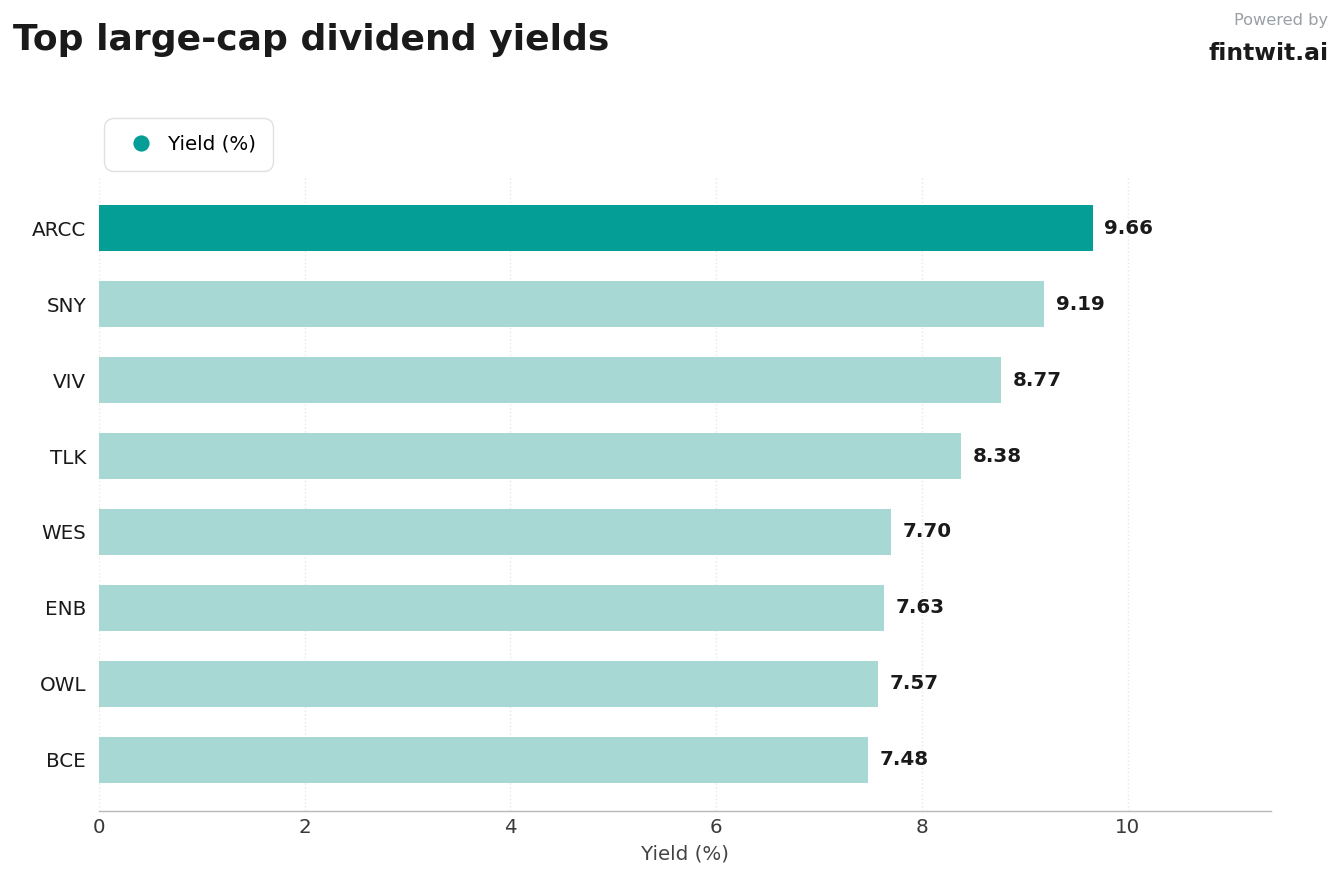
- Ares Capital Corporation (ARCC): 9.66% yield, moderate payout safety.
- Sanofi ADR (SNY): 9.19% yield, 92.15% payout ratio, high risk.
- Telefonica Brasil SA ADR (VIV): 8.77% yield, stable telecom cash flows.
- Telkom Indonesia (TLK): 8.38% yield, volatile price history.
- Western Midstream Partners (WES): 7.70% yield, strong 12-month performance.
- Enbridge Inc (ENB): 7.63% yield, reliable midstream infrastructure.
- Blue Owl Capital Inc (OWL): 7.57% yield, high sensitivity to asset management fees.
- BCE Inc (BCE): 7.48% yield, legacy telecom dividend payer.
Yield traps
A yield trap occurs when a stock's price falls because the market anticipates a dividend cut. These companies often show high payout ratios that leave little room for operational error or capital reinvestment.
Sanofi (SNY) serves as a primary example of a high-yield asset requiring caution. With a payout ratio of 92.15%, the company is distributing nearly all of its earnings to shareholders, leaving minimal buffer for unexpected pharmaceutical R&D costs or regulatory shifts.
- Sanofi (SNY): High payout ratio of 92.15% limits dividend coverage.
- Blue Owl Capital (OWL): Significant 36.93% price decline over the past year suggests market skepticism regarding future earnings growth.
- Telkom Indonesia (TLK): Sustained price weakness of 23.98% indicates potential long-term structural challenges.
Build an income sleeve
Constructing an income sleeve involves balancing high-yield exposure with companies that demonstrate consistent dividend growth. Relying solely on the highest yields often leads to portfolio erosion through capital depreciation.
Investors should prioritize companies with payout ratios below 70% to ensure dividend sustainability. Diversifying across sectors like energy midstream and financial services can mitigate the impact of a single dividend cut.
- Focus on companies with a history of annual dividend increases rather than just current yield.
- Monitor quarterly earnings reports for changes in payout ratios exceeding 85%.
- Rebalance the sleeve annually to ensure sector weightings remain aligned with risk tolerance.