The matchup
Salesforce and Oracle represent two distinct approaches to the enterprise software transition in 2026. Salesforce focuses on application-layer dominance through its Data Cloud and Agentforce platform, aiming to monetize AI through high-margin software seats.
Oracle has pivoted toward a capital-intensive infrastructure model, spending heavily to build out the cloud capacity required to host massive AI workloads. This divergence creates a clear choice between software-led margin expansion and infrastructure-led revenue scale.
- Salesforce market cap: $183.07 billion.
- Oracle market cap: $423.49 billion.
- Salesforce primary moat: Proprietary enterprise data sets.
- Oracle primary moat: Dominant database infrastructure and IaaS scaling.
Numbers side by side
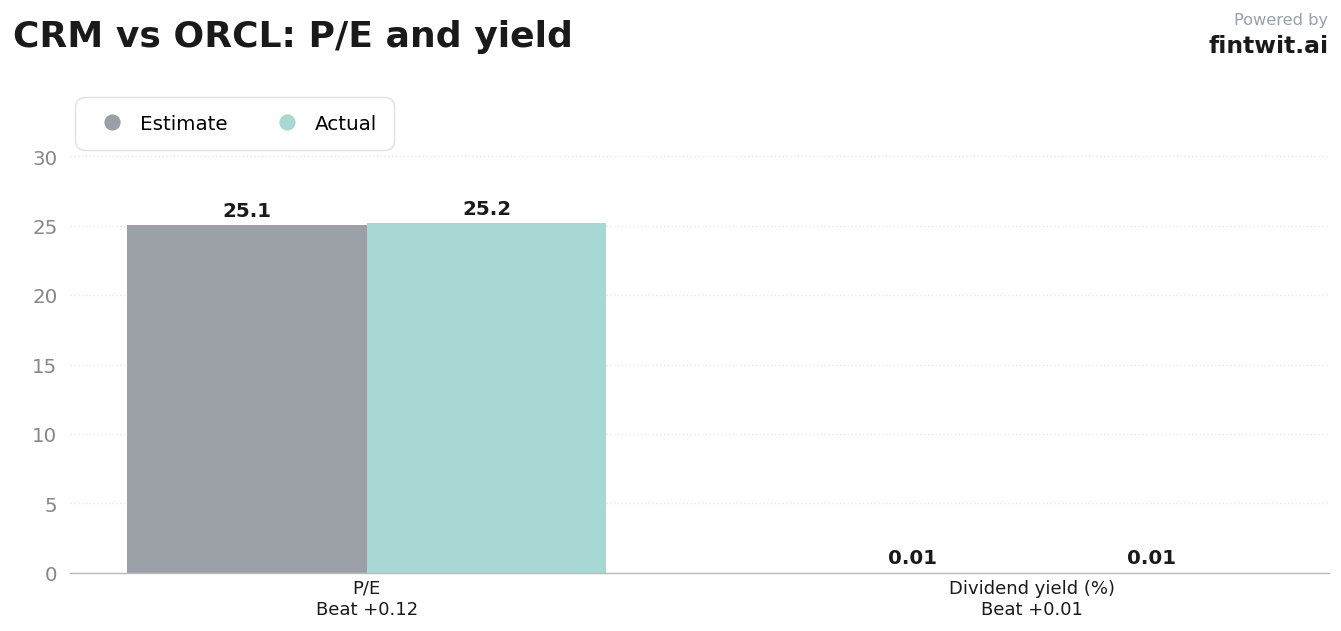
The financial profiles of these two companies highlight the trade-off between Salesforce's operational efficiency and Oracle's aggressive growth spending. Salesforce maintains a P/E ratio of 25.05, while Oracle trades at a similar 25.17, despite vastly different capital requirements.
Investors should note the divergence in recent performance, with Salesforce up 6.01% over the last 90 days, while Oracle has faced a 24.97% decline in the same period. The following data highlights the key valuation and performance metrics for both firms.
- Salesforce revenue growth: 13.3% YoY (Q1 FY27).
- Oracle revenue growth: 21% YoY (Q4 FY26).
- Salesforce 1-year return: -19.86%.
- Oracle 1-year return: -41.20%.
- Salesforce dividend yield: 0.85%.
- Oracle dividend yield: 1.39%.
Bull and bear on each
The bull case for Salesforce rests on its ability to drive high-margin recurring revenue through Agentforce, while the bear case centers on the risk of seat erosion. Oracle's bull case is anchored by its 93% growth in IaaS, though bears point to the massive debt and dilution risks associated with its $50 billion infrastructure fundraising.
Analyst sentiment remains split, reflecting the uncertainty surrounding AI monetization timelines for both companies.
- CRM Bull: $50B share repurchase program provides significant EPS support.
- CRM Bear: Consumption-based revenue models may fail to offset seat losses.
- ORCL Bull: $638B in Remaining Performance Obligations (RPO) provides long-term visibility.
- ORCL Bear: High customer concentration with entities like OpenAI creates revenue volatility.
- CRM Analyst Consensus: Buy with an average target of $249.51.
- ORCL Analyst Consensus: Neutral with an average target of $263.97.
The verdict
Salesforce offers a more balanced profile of profitable growth and shareholder-friendly capital allocation. Its focus on software-layer AI integration avoids the heavy capital intensity that currently weighs on Oracle's balance sheet.
Oracle remains a high-beta play on the success of its AI infrastructure investments. Success depends on whether it can maintain its 20%+ revenue growth rate while transitioning to self-funding cash flow.