The headline number
Marathon Petroleum Corp currently commands a market capitalization of $102.84 billion. The stock trades at a price of $360.75 per share, reflecting a P/E ratio of 12.42.
Analyst sentiment remains divided regarding the stock's intrinsic value. Estimates range from a bearish $217.00 to a bullish $439.17 per share.
The company maintains a dividend yield of 1.12%. Management has authorized a $5 billion share repurchase program to return capital to investors.
- Simply Wall St fair value estimate: $371.00
- ValueInvesting.io fair value estimate: $439.17
- TRADERNET fair value estimate: $217.00
Peer comparison
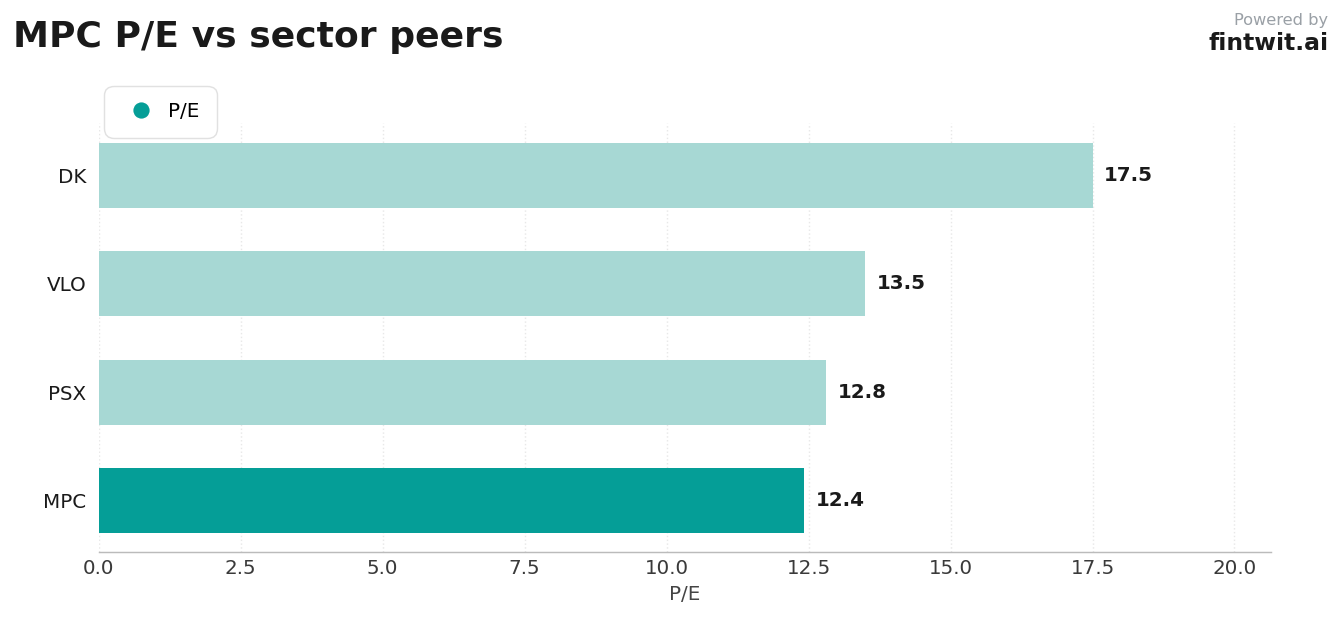
MPC operates within a competitive landscape of independent refiners. Its valuation multiple sits at the lower end of the peer group, suggesting a potential discount relative to its operational scale.
The following data compares MPC's P/E ratio against key industry competitors. These figures reflect the market's current pricing of refining assets and midstream integration.
- MPC P/E ratio: 12.42
- Phillips 66 (PSX) P/E ratio: 12.8
- Valero Energy Corp (VLO) P/E ratio: 13.5
- Delek US Holdings (DK) P/E ratio: 17.5
Bull vs bear
The bull case centers on the company's operational efficiency and integrated midstream cash flows. Conversely, the bear case highlights the cyclical nature of refining margins and potential regulatory headwinds.
Investors must weigh these competing narratives against the company's 2027 outlook.
- Bull: Integrated model provides a defensive buffer against refining margin volatility.
- Bull: Aggressive $5 billion share repurchase program drives EPS growth.
- Bull: High utilization rates at refineries like Robinson and El Paso capture outsized margins.
- Bear: Normalization of crack spreads from current elevated levels could compress earnings.
- Bear: Long-term structural decline in fossil fuel demand poses a risk to core profitability.
- Bear: Regulatory pressure, such as California SB X1-2, increases operating costs.
Fintwit's AI verdict
The quantitative analysis suggests that the current market price does not fully account for the company's operational resilience and capital return strategy. While cyclical risks are present, the valuation gap relative to peers provides a margin of safety for long-term holders.
Market participants are closely watching the upcoming quarterly throughput data to confirm if the company can sustain its current utilization rates. The outlook remains positive as the firm continues to prioritize shareholder returns through 2027.