The headline number
Marathon Petroleum (MPC) maintains a market capitalization of $99.81 billion. Its current P/E ratio of 12.33 suggests a valuation discount relative to broader energy sector averages.
Independent research firms like Alpha Spread estimate a potential 15% upside from current price levels. Simply Wall St places the fair value range between $371.00 and $396.00 per share.
- Current Price: $358.18
- P/E Ratio: 12.33
- Dividend Yield: 1.12%
- 180-Day Performance: +79.48%
Peer comparison
Refining peers trade at varying multiples based on their specific operational complexity and midstream integration. MPC remains competitively positioned within this group.
Phillips 66 and Valero Energy command higher multiples, reflecting different asset mixes and market perceptions of their respective business models.
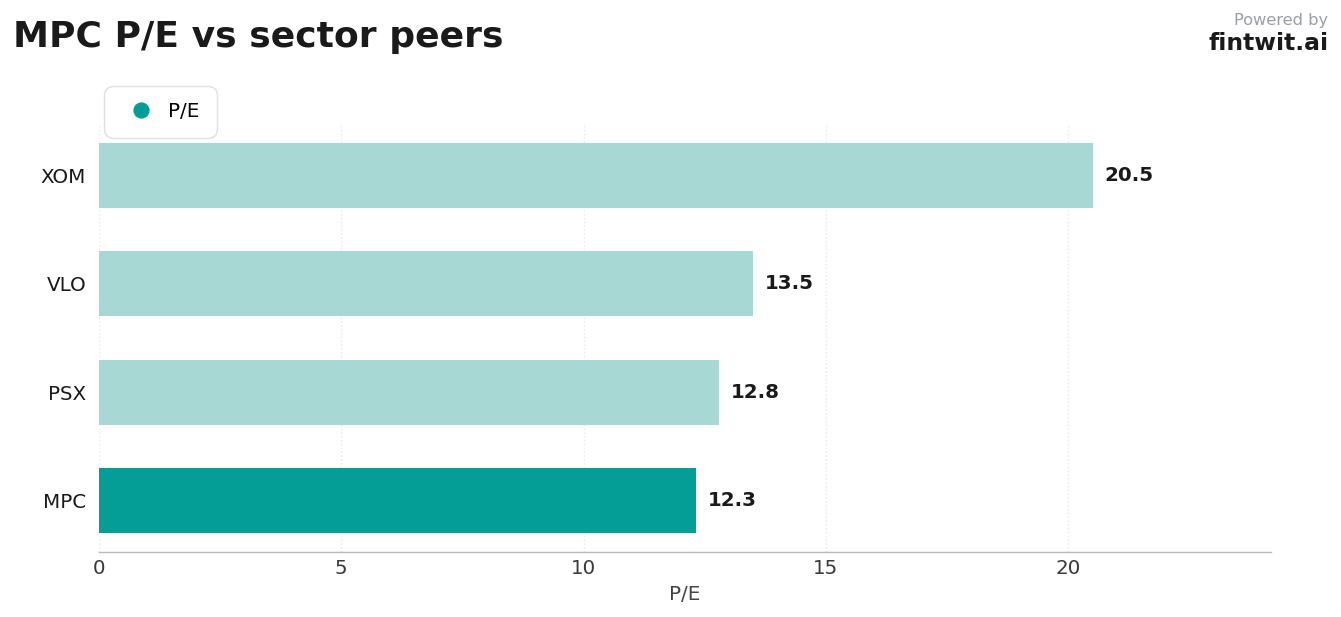
- MPC: 12.33 P/E
- PSX: 12.8 P/E (reflects diversified midstream/chemicals profile)
- VLO: 13.5 P/E (reflects higher complexity and renewable diesel exposure)
- XOM: 20.5 P/E (reflects integrated supermajor status and upstream scale)
Bull vs bear
The investment thesis for MPC hinges on its ability to maintain high utilization rates while returning capital to shareholders. Conversely, cyclical risks remain a primary concern for the refining industry.
Management has provided clear guidance on capital allocation for the coming years. This includes significant investment in the MPLX midstream segment to drive distribution growth.
- Bull: Strong refining margins supported by tight global fuel inventories and resilient domestic demand.
- Bull: Aggressive capital return program, including a $5 billion share repurchase authorization as of May 2026.
- Bull: Stable cash flow contribution from MPLX, targeting mid-single-digit EBITDA growth.
- Bear: Refining margins are highly cyclical and may revert to mean as supply/demand balances normalize.
- Bear: Long-term structural decline in fossil fuel demand threatens core refining profitability.
- Bear: Regulatory pressures, such as California SB X1-2, could compress margins and increase compliance costs.
Fintwit's AI verdict
The quantitative analysis suggests that the current market price does not fully account for the company's operational efficiency and capital return strategy. While cyclical headwinds are present, the firm's ability to generate cash flow remains a standout feature in the current energy landscape.
Investors should weigh the potential for continued margin strength against the inherent volatility of the refining sector. The company's focus on midstream growth provides a buffer against pure commodity price swings.