
The headline number
AerCap Holdings NV reported adjusted 2026 EPS guidance of approximately $16.80. This figure excludes potential gains from asset sales expected in the second half of the year.
The company maintains a market capitalization of $23.19 billion. Its current dividend yield stands at 1.09%.
- Seeking Alpha (The Aerospace Forum) estimates fair value between $171.64 and $179.09.
- ValueInvesting.io provides an independent fair value estimate of $288.28.
- The company repurchased $1.4 billion in shares year-to-date 2026.
Peer comparison
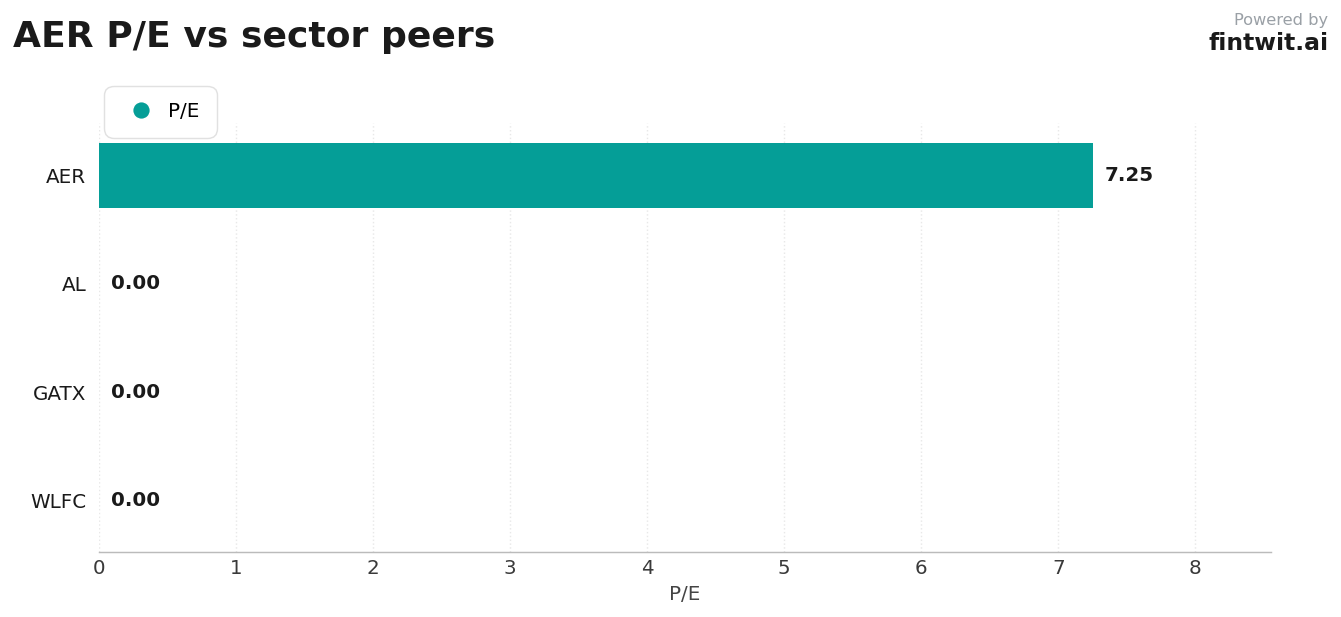
AerCap's valuation remains compressed relative to other leasing entities. The 7.25x P/E ratio reflects a discount compared to broader industrial leasing peers.
Market participants often use these specific tickers to benchmark AerCap's capital efficiency and asset cycle positioning.
- AerCap (AER): 7.25x P/E ratio.
- Air Lease Corp (AL): N/A P/E ratio.
- GATX Corp (GATX): 17.4x P/E ratio.
- Willis Lease Finance Corp (WLFC): 9.3x P/E ratio.
Bull vs bear
The bull case centers on the structural imbalance in the global aircraft market. Supply constraints continue to support elevated lease rates and asset valuations.
Conversely, the bear case highlights the company's leverage profile. A debt-to-equity ratio of 2.05x increases sensitivity to interest rate fluctuations.
- Bull: Persistent aircraft supply-demand imbalance drives strong lease yields.
- Bull: Disciplined capital allocation compounds book value per share.
- Bull: Strong cash flow supports fleet renewal into fuel-efficient aircraft.
- Bear: Market pricing suggests a cyclical peak in aviation leasing.
- Bear: High debt-to-equity ratio creates refinancing cost risks.
- Bear: Easing supply chain constraints may pressure future lease yields.
Fintwit's AI verdict
The quantitative assessment of AerCap suggests that the current market price does not fully capture the underlying asset value or the company's aggressive capital return program. While macroeconomic headwinds remain a factor, the firm's ability to navigate supply chain constraints provides a distinct operational advantage.
Investors should monitor the 2H 2026 asset sale performance as a primary indicator of earnings upside.