
The headline number
AerCap Holdings NV currently commands a market capitalization of $23.29 billion. Its valuation metrics suggest a significant discount relative to its historical earnings power and future cash flow projections.
The company raised its full-year 2026 adjusted EPS guidance to $16.80. This revision excludes potential gains from asset sales scheduled for the second half of the year, providing a conservative baseline for investors.
- Current Price: $148.20
- P/E Ratio: 7.28
- Dividend Yield: 1.07%
- 180-day Performance: -2.09%
- 2026 Adjusted EPS Guidance: $16.80
Peer comparison
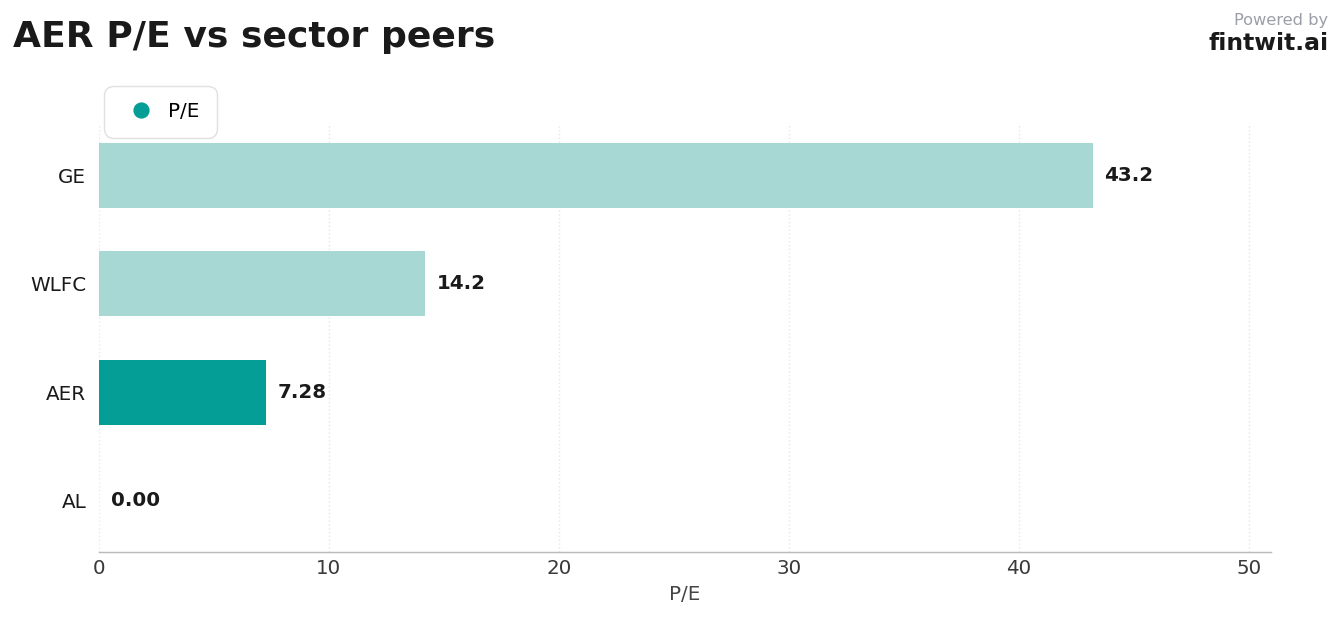
Valuing an aircraft lessor requires looking at both direct competitors and broader industrial players. AerCap's P/E of 7.28 sits at the lower end of the spectrum compared to niche players and industrial conglomerates.
The following data highlights how the market currently prices AerCap relative to its peers in the aviation and leasing space.
- AerCap (AER): 7.28 P/E
- Air Lease Corp (AL): N/A P/E
- General Electric (GE): 43.2 P/E
- Willis Lease Finance Corp (WLFC): 14.2 P/E
Bull vs bear
The investment thesis for AerCap centers on the structural supply-demand imbalance in the global aircraft market. This environment allows the company to maintain high lease rates and maximize asset utilization.
Conversely, the bear case highlights the cyclical nature of the aviation industry and the company's sensitivity to interest rate fluctuations. Debt management remains a critical focus for the firm given its capital-intensive operations.
- Bull Case: Persistent supply-demand imbalance supports higher lease rates and asset values.
- Bull Case: Disciplined capital allocation and aggressive share repurchases compound book value per share.
- Bull Case: Strong cash flow generation enables fleet modernization without excessive new debt.
- Bear Case: Market may be pricing in peak earnings, risking a cyclical downturn in travel demand.
- Bear Case: High sensitivity to interest rate environments increases the cost of debt.
- Bear Case: Potential for asset impairment if geopolitical tensions impact specific regional fleets.
Fintwit's AI verdict
The consensus among quantitative models suggests that the current market price does not fully capture the underlying asset value of the fleet. While macroeconomic headwinds persist, the company's ability to generate consistent cash flow provides a buffer against volatility.
Investors should monitor the company's ability to navigate supply chain constraints at major OEMs like Airbus and Boeing. The long-term outlook remains tied to the recovery of global air travel and the successful execution of fleet renewal strategies.