The matchup
The beverage sector is currently defined by a divergence in operational efficiency. Coca-Cola has successfully leveraged its asset-light franchise model to drive margin expansion, while PepsiCo faces headwinds from its dual-category exposure.
Coca-Cola's Q1 2026 operating margin reached 35.0%, up from 32.9% in the prior year. This performance highlights the effectiveness of its pricing discipline and revenue management strategies.
PepsiCo's Q2 2026 results show a different story, with core operating margins declining 40 basis points. The company is currently balancing affordability investments against persistent volume pressures in North American snacks and beverages.
- Coca-Cola (KO) maintains a pure-play beverage focus with a global franchise network.
- PepsiCo (PEP) operates a diversified model spanning snacks via Frito-Lay and beverages.
- Coca-Cola reported 12% YoY revenue growth in Q1 2026.
- PepsiCo reported 6.4% YoY revenue growth in Q2 2026.
Numbers side by side
Valuation metrics suggest that the market is currently pricing in Coca-Cola's superior margin trajectory. While both companies trade at similar earnings multiples, their recent price action tells a story of diverging investor confidence.
The following data highlights the current financial standing of both companies as of mid-2026.
- Market Cap: KO $321.7B vs PEP $205.2B.
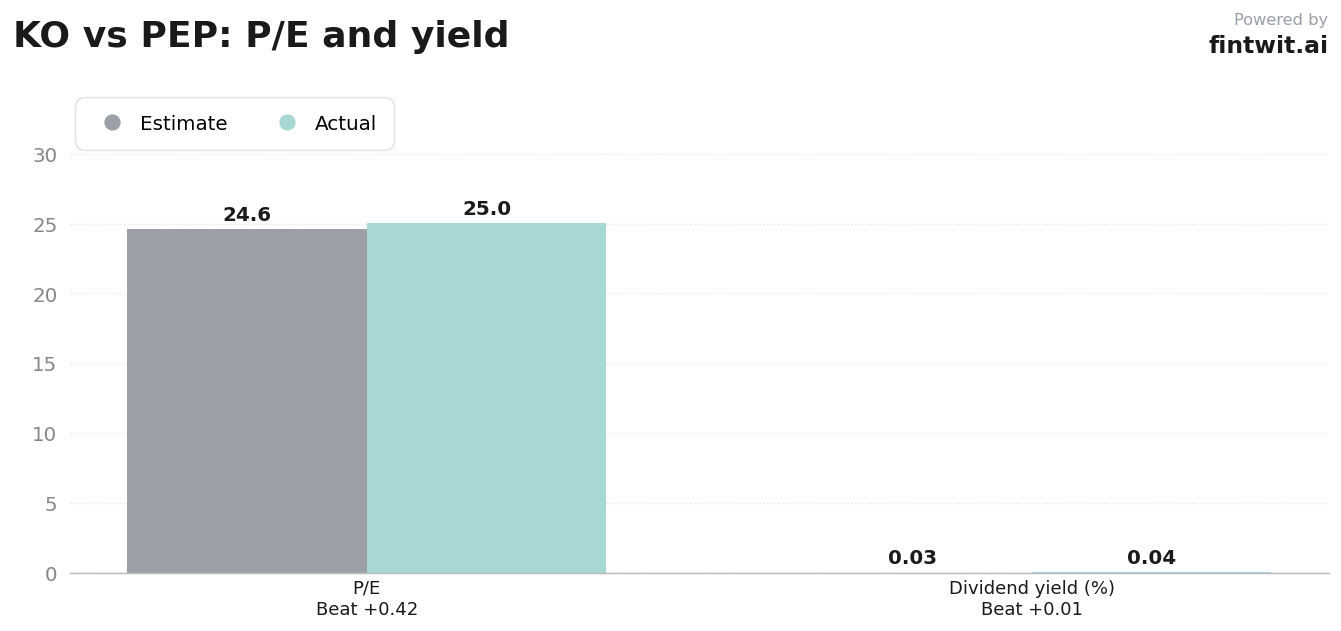
- P/E Ratio: KO 24.59 vs PEP 25.01.
- Dividend Yield: KO 2.70% vs PEP 3.68%.
- 1-Year Price Change: KO +19.78% vs PEP +1.23%.
- 90-Day Price Change: KO +10.32% vs PEP -12.53%.
Bull and bear on each
Analyst sentiment remains split based on the specific operational challenges facing each firm. Citigroup and B of A Securities maintain buy ratings on Coca-Cola, citing its consistent execution.
PepsiCo's outlook is more cautious, with Jefferies holding a neutral view due to leverage and volume concerns.
- KO Bull Case: AI-driven supply chain efficiencies and premium product mix expansion.
- KO Bull Case: Continued volume recovery in emerging markets.
- KO Bear Case: $14B unresolved IRS tax dispute and regulatory sugar tax risks.
- PEP Bull Case: Turnaround potential in North America Foods volume.
- PEP Bull Case: Productivity savings driving long-term operating leverage.
- PEP Bear Case: High leverage and liquidity constraints relative to industry peers.
- PEP Bear Case: Persistent channel mix pressures in North American snacks.
The verdict
Determining the better buy requires weighing Coca-Cola's operational momentum against PepsiCo's potential for a cyclical turnaround. Coca-Cola's ability to maintain high margins in an inflationary environment provides a defensive buffer that PepsiCo currently lacks.
Investors should monitor whether PepsiCo's productivity initiatives can offset the margin compression seen in recent quarters. Coca-Cola's path appears more predictable, though PepsiCo offers a higher dividend yield for income-focused portfolios.