Why it's trending
Market participants are closely monitoring Apple's ability to monetize its massive installed base of over 2.2 billion active devices. The recent focus centers on whether Siri AI can successfully drive hardware refresh cycles for the iPhone 17 lineup.
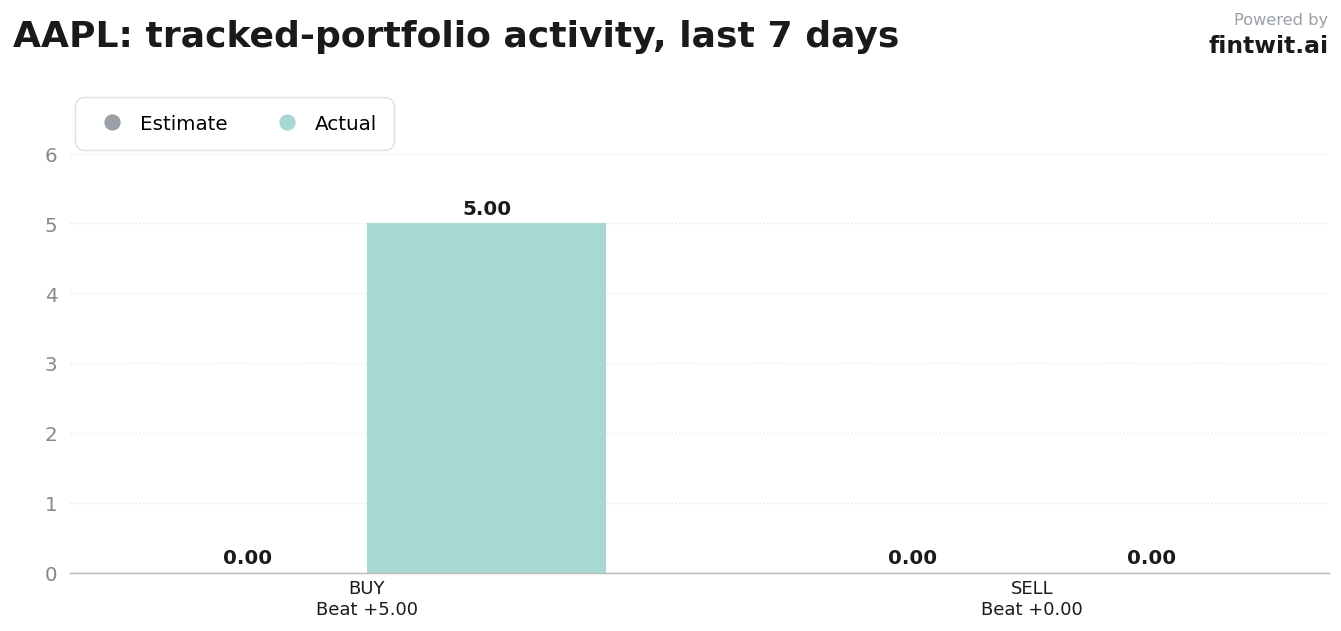
Sentiment remains overwhelmingly positive among institutional participants, with zero sell ratings recorded over the last seven days. The current momentum reflects confidence in the company's ability to leverage its ecosystem to offset potential hardware saturation.
- Buys over the last 7 days: 5
- Sells over the last 7 days: 0
- 180-day price performance: 12.66% gain
The business in numbers
Apple's financial structure relies on a dual-engine model of hardware sales and high-margin services. The company continues to demonstrate strong free cash flow conversion exceeding 100%.
Valuation multiples remain elevated compared to historical averages, reflecting the market's premium for Apple's earnings quality and capital return program. The board recently authorized a $100 billion share repurchase plan for 2026.
- iPhone revenue growth (Q3 2026): 22% YoY
- Mac revenue growth (Q3 2026): 29% YoY
- Services revenue share: Approximately 28% of total revenue
- P/E ratio: 36x-40x
- EV/EBITDA: ~27x
Bull vs bear
Bullish analysts emphasize the transformative potential of AI integration and the strength of the existing ecosystem. Bears point to macroeconomic headwinds and the risks associated with outsourcing core AI execution.
The divergence in price targets highlights the uncertainty surrounding Apple's long-term margin trajectory. Risks such as memory inflation and foreign exchange headwinds remain primary concerns for the bear camp.
- Bull: Dan Ives (Wedbush) targets $400, citing Siri AI as a core strength.
- Bull: Wamsi Mohan (Bank of America) targets $380, citing lean inventory levels.
- Bear: William Kerwin (Morningstar) targets $285, citing supply chain constraints.
- Bear: FinanceFeeds analysts target $215, citing risks of outsourcing AI to competitors.
Fintwit's AI verdict
The algorithmic sentiment analysis aggregates current analyst ratings, historical price action, and institutional flow data to determine a directional bias. The model weighs the impact of the $100 billion capital return program against the risks of potential hardware saturation.
Investors are currently positioning for a potential breakout based on the success of the iPhone 17 cycle.